Most cities have their street infrastructure done in the cheapest, most utilitarian way possible. Manhole covers are round, utility caps are generic, water meter lids are plain cast iron rectangles. New Orleans did not get that memo.
Walk the streets of the French Quarter and look down. Scattered across the sidewalks, set flush into the concrete, are cast iron water meter covers with an intricate, almost decorative design — a crescent moon and star graphic surrounded by ornate borders and the words "New Orleans Sewerage and Water Board." They're gorgeous. They look like they belong on a piece of Victorian ironwork, not buried in a sidewalk.
Why Are These So Beloved?
New Orleans has a long tradition of ornate craftsmanship that shows up in unexpected places — the ironwork balconies of the French Quarter, the elaborate above-ground tombs in the cemeteries, the carved wood brackets on old shotgun houses. The water meter covers fit that tradition. Someone, at some point, decided that even the city's water infrastructure should look beautiful. And it does.
Over the decades these covers became a local icon. Tourists photograph them. Locals have strong opinions about their preservation. When the Sewerage and Water Board started replacing aging infrastructure, there was genuine public concern about losing the old-style covers. They've been reproduced on everything from T-shirts to tattoos. The crescent and star design is immediately recognizable to anyone who's spent time in the city.
It's the kind of small, specific thing that makes a city feel like a place rather than just a collection of streets.

The real thing — a New Orleans crescent & star water meter cover set in a French Quarter brick sidewalk. Photo: pwbaker / Wikimedia Commons, CC BY 2.0
How It Became a Clock
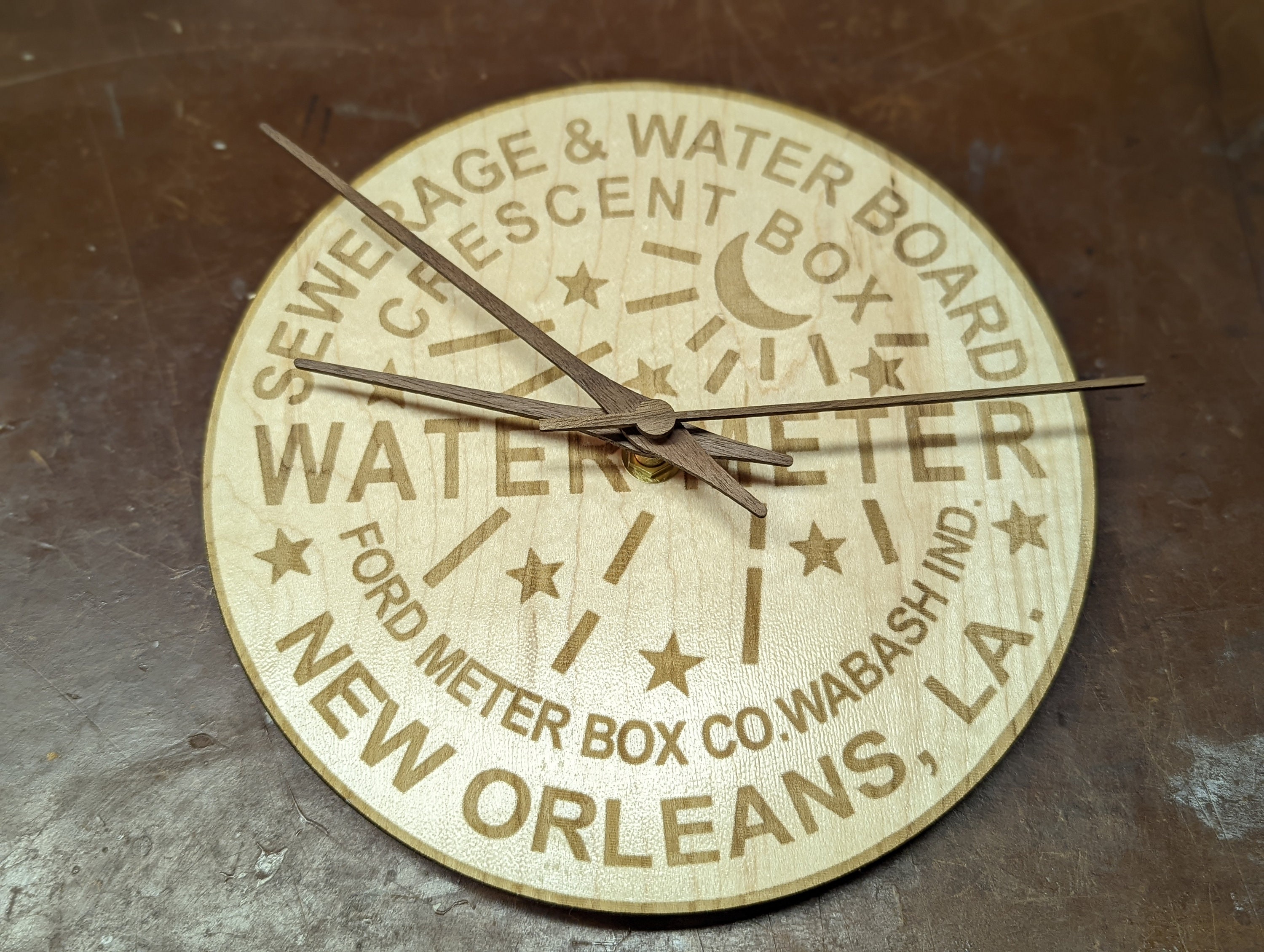
I traced the design from reference photos — the crescent, the star, the concentric decorative borders, the text — and redrew it as a vector file clean enough for laser engraving. The result is faithful to the original without being a direct copy: the proportions are right, the ornamental feel is there, and the text is correct.
The clock is laser-engraved on a wood disc, about 10 inches in diameter. The engraved design pops well on wood — you get the contrast between the burned areas and the natural wood that makes the detail legible from across a room. Add clock hands and a standard quartz movement and it becomes a piece that's both functional and genuinely decorative.
There's also a magnet version for people who want the design without the clock — same engraving, smaller disc, strong magnet backing. Good for fridges, magnetic whiteboards, anywhere you want a small piece of NOLA.
The clock is here, and the magnet version is a separate listing — same design, smaller format. It's a niche product, but the people who find it are genuinely excited about it.
Who This Is For
The obvious audience is anyone with a connection to New Orleans — former residents, frequent visitors, people who fell in love with the city and want to bring a piece of it home. It's also a strong gift for anyone who appreciates cities, architecture, or the kind of unexpected beauty you find when you look at the ground in old places.
It makes a much better NOLA souvenir than anything you'd find on Bourbon Street. It's handmade, it's useful, it'll live on a wall for years rather than getting buried in a drawer.
Frequently Asked Questions
Sources & References
- Wikimedia Commons
- clock is here
- The New Orleans Water Meter Cover: City Icon Since 1921 — VARØ Industries Blog
- Everything I Sell on Etsy: The Complete VARØ Industries Guide — VARØ Industries Blog
- The NASA Voyager Golden Record Clock: A Piece of Science History on Your Wall — VARØ Industries Blog
- Why Wood Light Switch Plates Are My Best-Selling Etsy Product — VARØ Industries Blog
- What 190+ Five-Star Buyers Say About These Wood Switch Plates — VARØ Industries Blog