Sales tax is one of those things most new craft fair vendors don't think about until their first quarterly filing is due. You spend the season selling at markets, collecting cash and card payments, and then realize: you need to remit a portion of that to the state. How much, exactly?
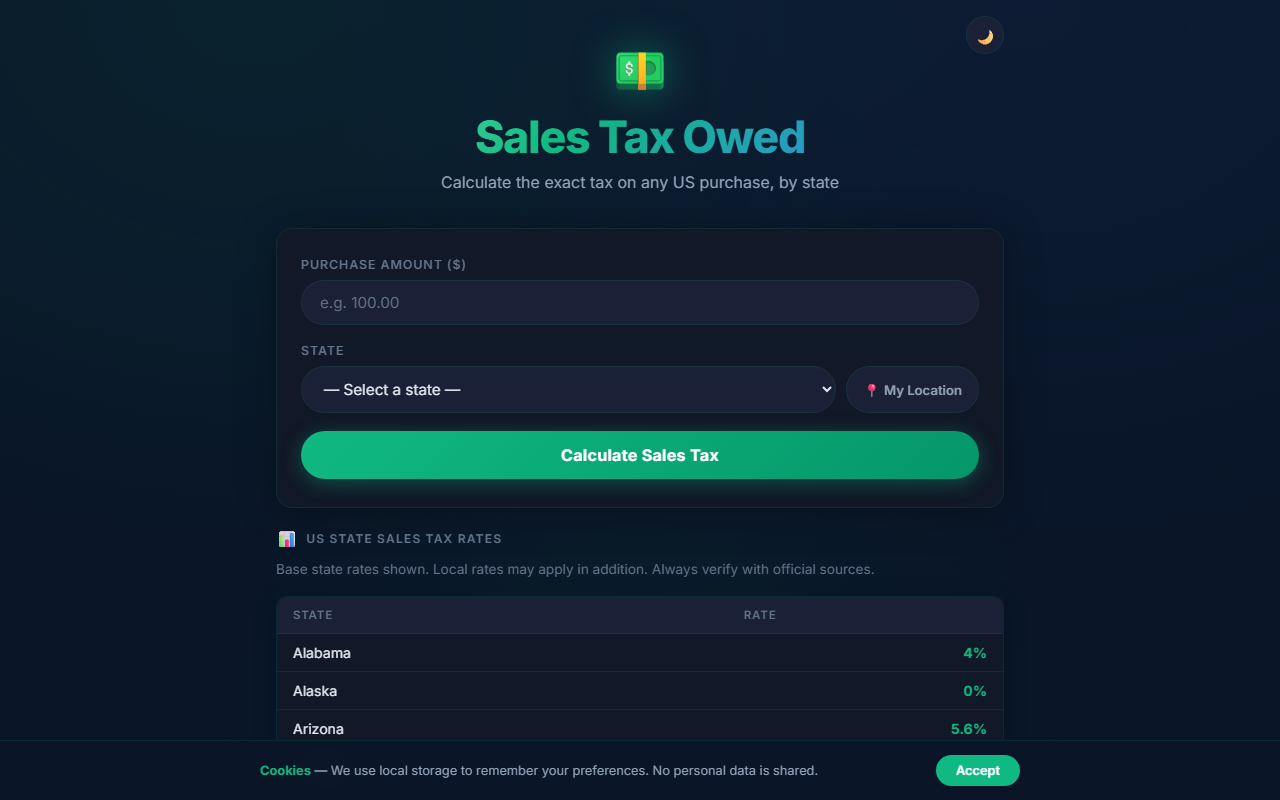
The answer depends on your state's tax rate, your total taxable sales, and whether you charged tax on top of your prices or built it into your listed prices. SalesTaxOwed.us handles the calculation for free — enter your numbers and get the remittance amount immediately.
Do Craft Fair Vendors Have to Collect Sales Tax?
In most US states, yes. If you sell physical goods at an in-person event, you generally have sales tax nexus in that state and are required to collect and remit sales tax. There are exceptions — some states exempt handmade food, clothing under a price threshold, or agricultural products — but for most craft fair merchandise, tax applies.
You need to register as a sales tax vendor with your state before you can legally collect. This is typically a simple online registration through your state's department of revenue.
The Two Scenarios for Calculating What You Owe
If you charged tax on top of your prices (the customer paid $20 + $1.30 tax = $21.30), your taxable sales are the pre-tax total. Multiply that by the tax rate to confirm the amount collected, then remit that amount.
Example: $2,000 in sales × 6.5% = $130 owed
If you included tax in your prices (the customer paid $20 and the tax was inside that), you need to back-calculate the pre-tax amount first. See the reverse sales tax calculator for that step, then use the pre-tax total here.
Quarterly vs. Annual Filing
Most states require quarterly sales tax returns — due in April, July, October, and January for the previous quarter. If your annual taxable sales are very low, some states allow annual filing. Check your state's revenue department for your specific schedule.
Missing a filing deadline usually results in a penalty and interest. If you had no sales in a quarter, you still need to file a zero return in most states.
Track Sales Per Event to Make Filing Easier
If you're logging your sales per event in FairKeep, you already have the data you need for your quarterly return. Sum up gross sales for the quarter, subtract any non-taxable sales, and run that total through the calculator at SalesTaxOwed.us.
A Note on Combined State and Local Rates
Some states have additional county or city sales tax on top of the base state rate. Your combined rate might be 6% state + 1.25% local = 7.25% total. Use your combined rate in the calculator — that's the rate you charged customers, and it's the rate used to determine the total tax collected. Both tools are part of the free VendorTools suite.
Frequently Asked Questions
Sources & References
- SalesTaxOwed.us
- FairKeep
- VendorTools
- VendorTools: The Free Toolkit Every Craft Fair Vendor Needs — VARØ Industries Blog
- FairKeep: The Event Tracker Built for Craft Fair Vendors — VARØ Industries Blog
- How to Back-Calculate Sales Tax from a Total (Reverse Sales Tax) — VARØ Industries Blog
- How to Price Handmade Products: Using MarginD for Craft Vendors — VARØ Industries Blog