I built foneinfo.us because I like knowing what's behind a phone number: who the carrier is, where it's from, what switch it runs through. But the moment I actually want that information is when an unknown number is ringing, and by the time I've opened a browser, it's gone to voicemail.
So I made it an app. FoneInfo is a free Android caller ID app. When a number that isn't in your contacts calls, it looks the number up and shows you the answer in a notification while the phone is still ringing.
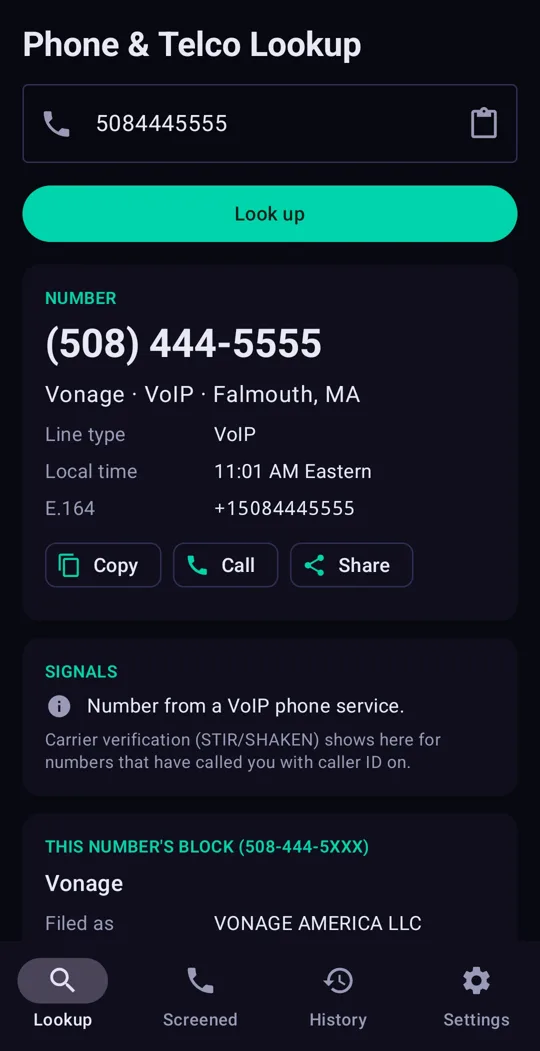
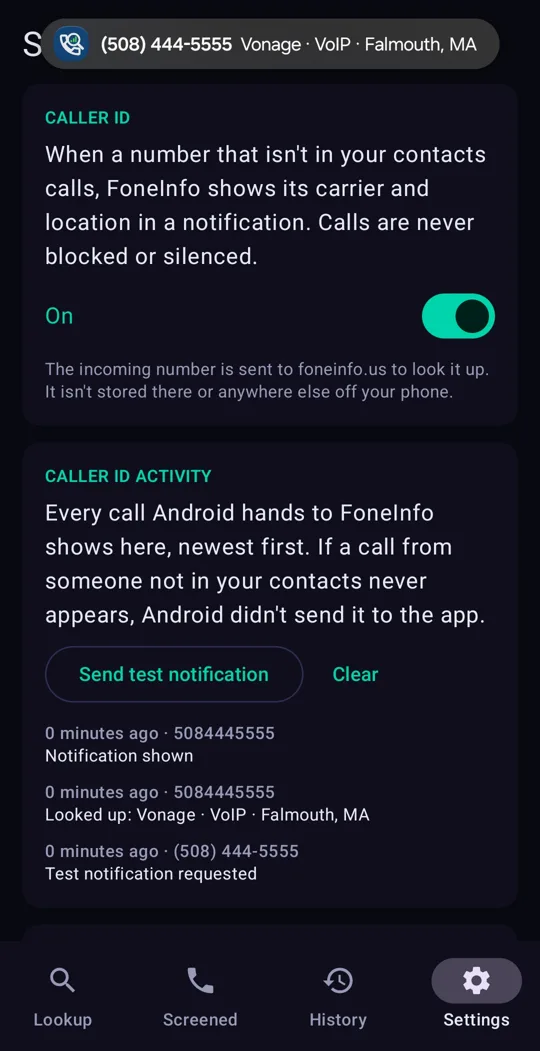
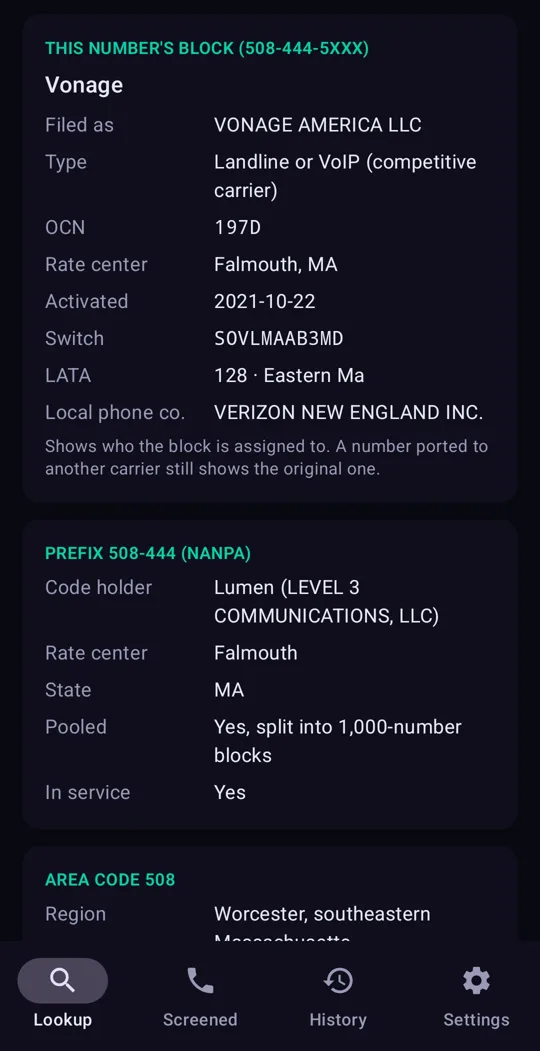
A lookup, the caller ID notification, and the 1,000-number block behind the number.
The Carrier Most Lookups Get Wrong
Building the app turned up something I hadn't fully appreciated. Most free number lookups tell you who holds the prefix, the first six digits. But carriers don't get prefixes whole anymore. A prefix is split into ten blocks of 1,000 numbers, and those blocks get handed to different carriers.
Take the 508-444 prefix on Cape Cod. Its code holder is Level 3. But the 508-444-5xxx block belongs to Vonage, 6xxx to Comcast, 2xxx and 9xxx to Bandwidth, and 3xxx to a carrier that only got its block last year. Ask most lookup sites about 508-444-5555 and they'll tell you Level 3. FoneInfo looks up the block, so it tells you Vonage, and that it's a VoIP line.
It also translates the names. Carrier records say things like “Omnipoint Miami E License, LLC” or “New Cingular Wireless PCS.” FoneInfo shows you T-Mobile and AT&T.
Is It Spoofed?
Spoofed caller ID is the real problem with phone spam, so FoneInfo checks for it a few ways:
STIR/SHAKEN is the system US carriers use to digitally sign caller ID so the receiving carrier can check it. It's genuinely useful, but your phone only knows the result if your carrier passes it along, and plenty of calls come through as “not verified”. That's why FoneInfo doesn't rely on it alone. If you want, it can silence the ringer for calls whose verification failed. It never blocks or rejects anything; the call still comes through.
What It Can't Tell You
- Where a ported number lives now. If someone moved their number from Verizon to T-Mobile, the block still says Verizon. Seeing the current carrier takes a paid number-portability lookup; free data can't do it.
- Anything about calls from your contacts. Android only gives caller ID apps the calls from numbers you don't have saved.
- Who the person is. FoneInfo is about the number and the network, not the name behind it.
Privacy
FoneInfo doesn't read your call log, contacts or messages, and it doesn't ask to. To look a number up, it sends just that number to foneinfo.us, which answers and keeps nothing: the server never logs a full number. There's no account, no ads and no analytics, and your history stays on your phone. Before caller ID turns on, the app tells you exactly what it sends and why. The details are in the privacy policy.
Get It
FoneInfo runs on Android 10 and newer. You can download it directly from the FoneInfo page right now, which walks through installing it and turning on caller ID. A Google Play release is on the way. Prefer the browser? Every lookup works at foneinfo.us.
Check out more free tools and apps at varo.industries/apps.
Frequently Asked Questions
Sources & References
- FoneInfo — download and install guide
- FoneInfo Privacy Policy
- Caller ID Authentication (STIR/SHAKEN) — FCC
- Do Not Call (DNC) Reported Calls Data — Federal Trade Commission
- Prevent caller ID spoofing — Android Developers
- Local Calling Guide — thousands-block carrier records