We make switch plates and outlet covers, so we spend a lot of time looking at what's behind them. Most homes in the US have only a handful of outlet types, and each one tells you something about the circuit behind it. This guide covers how to read them, what each one is for, and what the code says about replacing them, with links so you can check it yourself.
The Short Version
- Two-prong (1-15R): older wiring with no ground. Legal to keep; don't swap in a plain three-prong.
- Three-prong (5-15R): the standard 15-amp, 120-volt outlet in nearly every room.
- T-slot (5-20R): a 20-amp outlet. Takes ordinary plugs too.
- Big 240-volt outlets: dryers (14-30), ranges, RVs and EV chargers (14-50), window ACs and shop tools (6-15, 6-20), welders (6-50).
- GFCI: TEST and RESET buttons; shock protection near water. Test it monthly.
- AFCI: fire protection, usually a breaker in the panel rather than an outlet.
- TR and WR: tamper-resistant shutters and weather-resistant construction, marked on the face.
How to Read a NEMA Number
US plugs and outlets follow standard shapes from NEMA, the National Electrical Manufacturers Association. Each shape has a number like 5-15R:
- The first number is the family: what voltage it's for and which wires it has. 1 is two-wire 125 V with no ground, 5 is 125 V with a ground, 6 is 250 V with a ground, 10 is the older 125/250 V type with no ground, and 14 is 125/250 V with a neutral and a ground.
- The second number is the amp rating: 15, 20, 30, 50.
- R or P means receptacle (the outlet in the wall) or plug.
The shapes are deliberately different, so a 30-amp dryer plug won't go into a 50-amp range outlet and a 240-volt tool won't go into a 120-volt outlet. The main exception is on purpose: 20-amp outlets also accept 15-amp plugs.
Everyday 120-Volt Outlets
 1-15RTwo-prong, 15 A, 125 V
 5-15RThree-prong, 15 A, 125 V
 5-20RT-slot, 20 A, 125 V
Diagrams: Comrade Mmirg, CC BY-SA 4.0, via Wikimedia Commons. Drawn the way the NEMA chart shows them, ground on top; G = ground, W = neutral, X and Y = hot. In a lot of homes the ground hole sits at the bottom instead; the outlet is the same either way.
Two-Prong Outlets (NEMA 1-15R)
Two slots, no round ground hole. They're rated 15 amps at 125 volts, and you'll mostly find them in homes wired before the 1960s. On most of them one slot is taller than the other: that's the neutral, and it makes polarized plugs go in one way only. Very old ones have two slots the same size.
A two-prong outlet isn't automatically a code violation. When one wears out, the NEC lets you replace it with:
- another two-prong outlet,
- a GFCI outlet marked “No Equipment Ground”, or
- three-prong outlets that are protected by a GFCI and marked “GFCI Protected” and “No Equipment Ground”.
What you can't do is put a plain three-prong outlet on a circuit with no ground wire. It looks grounded and isn't. A GFCI makes an ungrounded outlet much safer against shock, but it doesn't create a ground, so surge protectors and equipment that needs a real ground still won't get one. Adding a ground wire, or rewiring the circuit, is the full fix. Skip the two-to-three-prong “cheater” adapters.
Three-Prong Outlets (NEMA 5-15R)
The standard US outlet: 15 amps, 125 volts, two flat slots and a rounded ground hole. The taller slot is neutral, the shorter one is hot. The ground pin gives fault current a path back to the panel so a breaker can trip instead of leaving a metal case live. Most household things plug in here, from lamps and TVs to most refrigerators.
20-Amp T-Slot Outlets (NEMA 5-20R)
Same as above, except the neutral slot is a sideways T. That lets it take a 20-amp plug, which has one blade turned sideways, as well as every ordinary 15-amp plug. Few household appliances actually ship with a 20-amp plug; you're more likely to meet one on a big window air conditioner, a compressor or commercial kitchen gear.
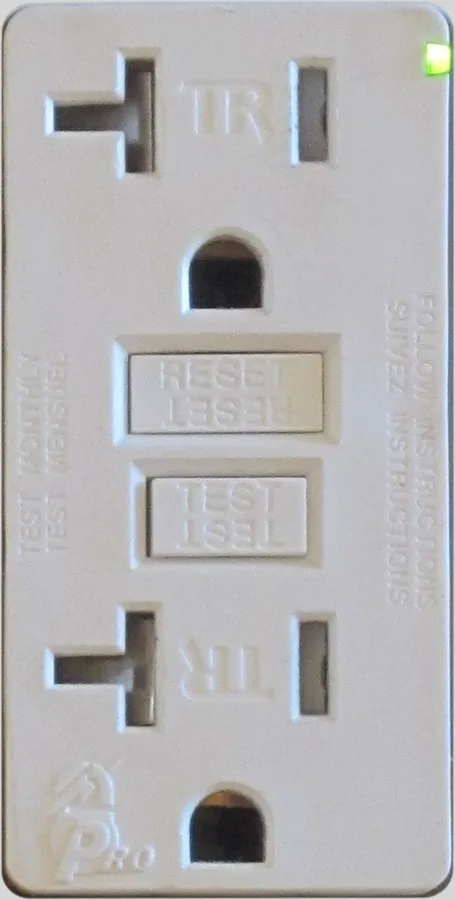
Kitchen countertop, bathroom and laundry outlets are on 20-amp circuits, but they usually have ordinary 15-amp outlets. That's allowed: a 15-amp outlet can go on a 20-amp circuit as long as the circuit has more than one receptacle, and a standard duplex counts as two. A single receptacle alone on a 20-amp circuit has to be a 20-amp one.
Going the other way is the mistake. The wire and the breaker decide what a circuit can carry, not the outlet. Putting a T-slot outlet on a 15-amp circuit doesn't make it a 20-amp circuit.
240-Volt Outlets for Big Appliances
 6-15R15 A, 250 V
 6-20R20 A, 250 V
 6-50R50 A, 250 V
 10-30ROld 3-prong dryer, no ground
 14-30R4-prong dryer, 30 A
 14-50RRange, RV, EV, 50 A
Diagrams: Comrade Mmirg, CC BY-SA 4.0, via Wikimedia Commons. Drawn the way the NEMA chart shows them, ground on top; G = ground, W = neutral, X and Y = hot.
These are bigger, and they're on a two-pole breaker that takes both hot legs from your panel. Here's what you'll usually find on each:
| Outlet | Rating | Wires | Usually for |
|---|---|---|---|
| 6-15R / 6-20R | 15 or 20 A, 250 V | 2 hots + ground | Larger window ACs, air compressors, shop tools. The 6-20R takes both 6-15 and 6-20 plugs. |
| 6-50R | 50 A, 250 V | 2 hots + ground | Welders, plasma cutters, some EV chargers. No neutral. |
| 10-30R | 30 A, 125/250 V | 2 hots + neutral, no ground | Older dryers. Not allowed for new installs since the 1996 NEC. |
| 14-30R | 30 A, 125/250 V | 2 hots + neutral + ground | Electric dryers today. L-shaped neutral slot. |
| 14-50R | 50 A, 125/250 V | 2 hots + neutral + ground | Freestanding electric ranges, RV hookups, plug-in Level 2 EV chargers. |
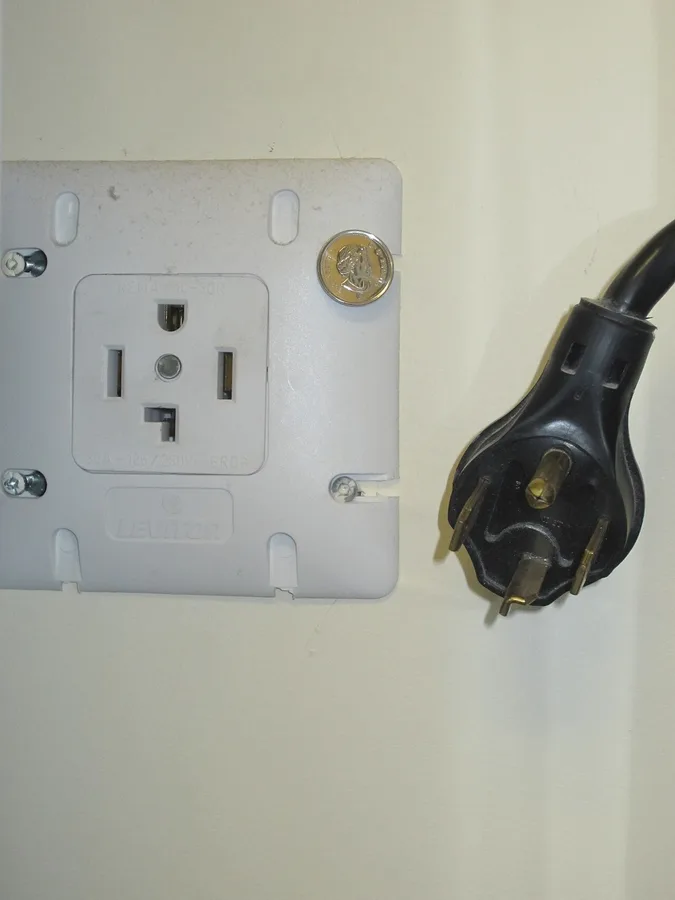
Water heaters, wall ovens, cooktops and mini-split heat pumps are usually hardwired, so you won't find a plug-in outlet for them at all.
Three-prong to four-prong isn't a swap. If you have a 10-30 dryer outlet and a new dryer with a four-prong cord, changing only the outlet leaves the ground slot connected to nothing. The fix is new four-wire cable from the panel, or fitting the dryer with a cord that matches the outlet you have. Similarly, a 6-50 has no neutral, and some EV chargers that come with a 14-50 plug need one. This is heavy-gauge wire on large breakers: a job for an electrician.
Outlets That Protect You
GFCI Outlets
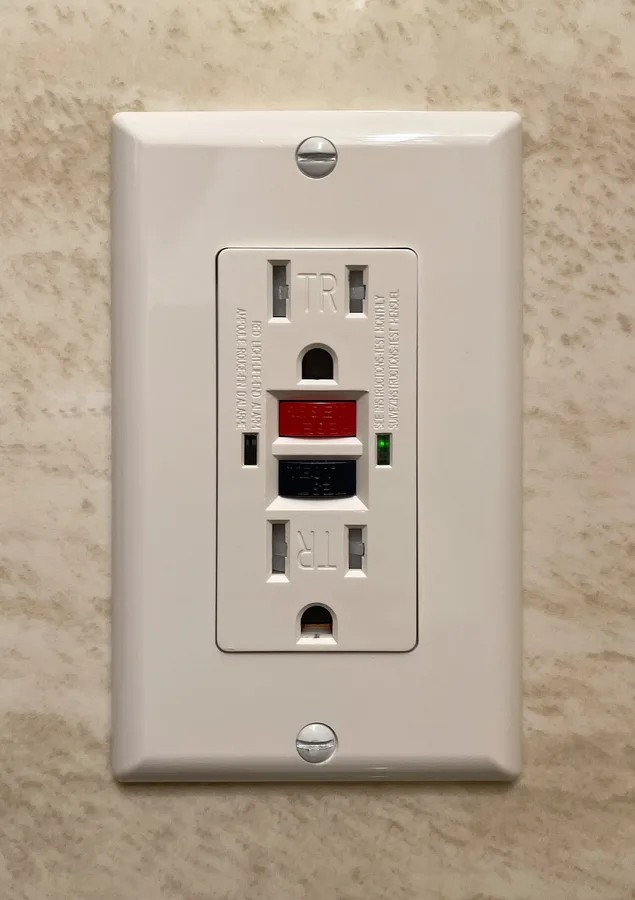
A ground-fault circuit interrupter compares the current going out on the hot wire with the current coming back on the neutral. If some is leaking somewhere else, say through a person standing on a wet floor, it cuts the power. A Class A GFCI must trip when the leak reaches 6 milliamps and must not trip below 4. That's far below what trips a breaker; a GFCI is about shock, not overloads.
You'll spot one by its TEST and RESET buttons. The NEC requires GFCI protection for outlets in bathrooms, garages, outdoors, crawl spaces, basements, kitchens and laundry areas, and within 6 feet of sinks, tubs and showers. One GFCI outlet can also protect the regular outlets wired after it on the same circuit; those should carry a “GFCI Protected” sticker. The protection can also come from a GFCI breaker in the panel instead.
Test them monthly. GFCI instructions say to test monthly. Plug in a lamp, press TEST and the lamp should go out; press RESET and it should come back. The CPSC's advice: if it doesn't trip or won't reset, replace it.
AFCI Protection
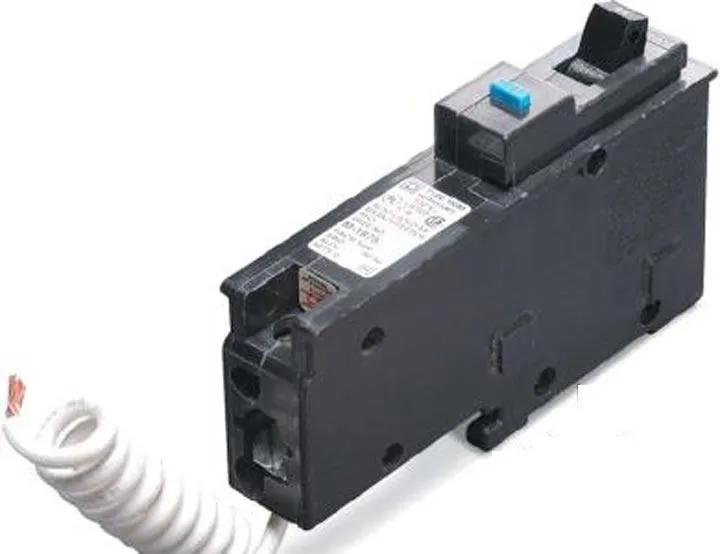
An arc-fault circuit interrupter watches for the electrical signature of arcing: a cord crushed under furniture, a nail through a cable, a loose connection. Arcing heats things up and starts fires, and it often doesn't draw enough current to trip a normal breaker. So an AFCI is about fire, where a GFCI is about shock.
Most AFCI protection is a breaker in the panel, often with a TEST button on it, and the outlets in the room look normal. There are also AFCI receptacles, meant for adding protection to an existing circuit; the 2026 NEC makes that easier by allowing the AFCI device at the first outlet when an existing circuit is extended or modified. The NEC requires AFCI protection for 120-volt, 15- and 20-amp circuits in kitchens, bedrooms, living areas, closets, hallways, laundry areas and similar rooms.
When You Need Both
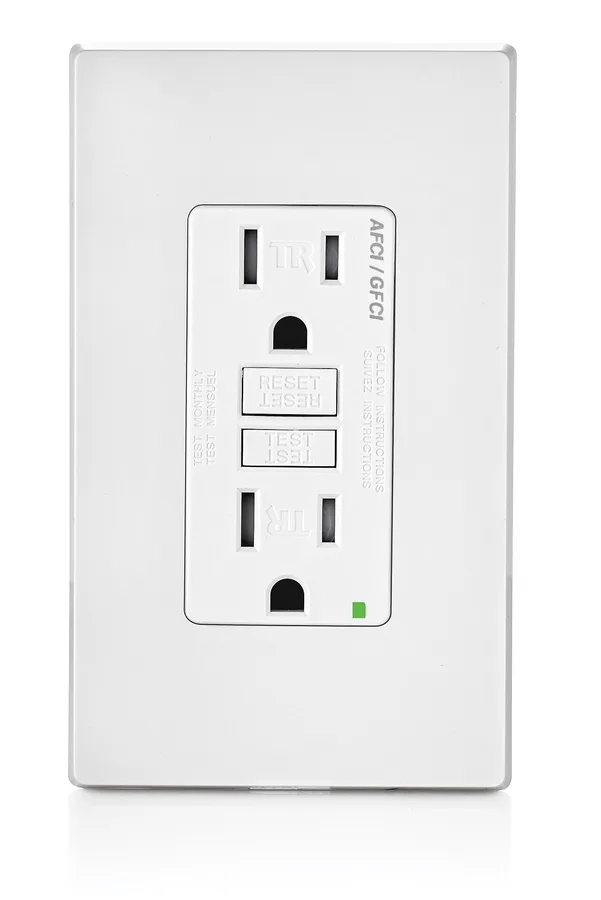
Kitchens and laundry areas need both kinds of protection. That can be a dual-function breaker, a dual-function outlet like the one above, or an AFCI breaker feeding a GFCI outlet.
Features Built Into the Outlet
Tamper-Resistant (TR)
Look closely at a newer outlet and you'll see “TR” molded into the face (it's in both photos above). Inside, spring-loaded shutters cover the slots and open only when both blades of a plug push in at once, so a hairpin or key pushed into one slot hits plastic. The 2008 NEC made them required in new homes; since the 2011 NEC, replacing an outlet in those locations also means a tamper-resistant one. Outlets more than 5½ feet up and ones built into a fixture or appliance are among the exceptions.
Weather-Resistant (WR)
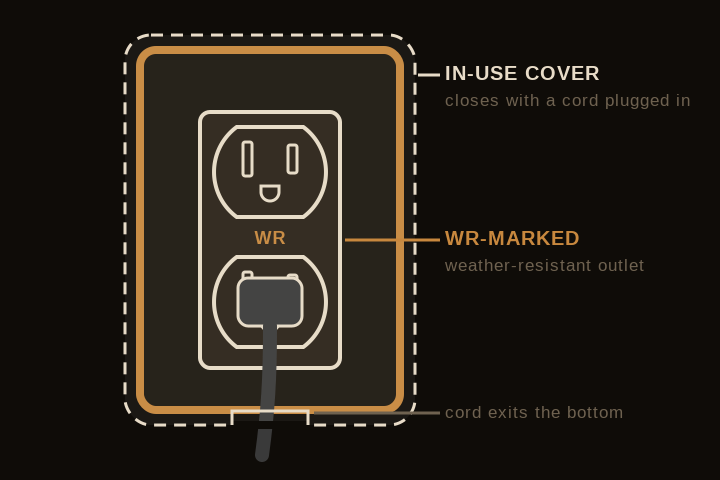
Outlets in damp or wet locations, like porches, decks and outdoor walls, have to be listed weather-resistant and marked “WR”. They're built to resist corrosion and UV. In a wet location the cover matters too: it has to be an “in-use” bubble cover that stays weatherproof with a cord plugged in. Outdoor outlets at a home also need GFCI protection.
Convenience Outlets
USB Outlets
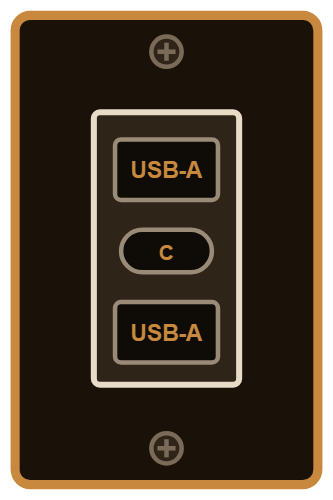
USB outlets replace a standard outlet and add USB-A, USB-C or both. Some keep two regular outlets, others are USB only. Charging power varies a lot between models, so check the wattage on the package if you want to fast-charge a laptop or phone. Most use a rectangular Decora-style face.
Switched Outlets
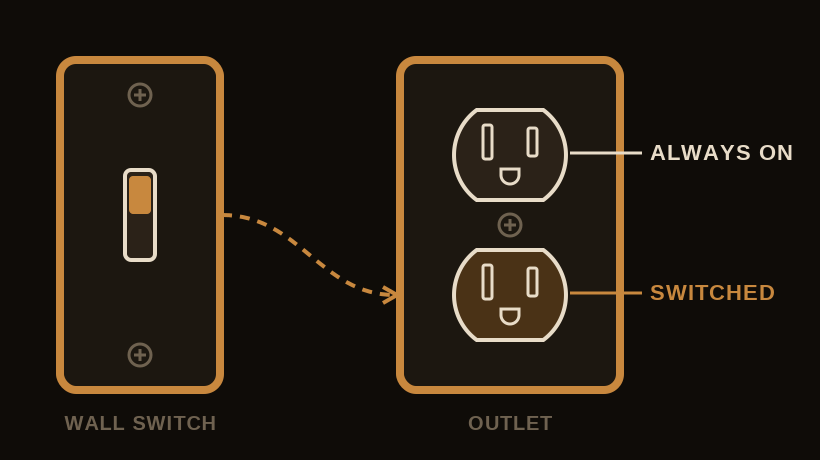
A switched outlet is controlled by a wall switch, often just one half of a duplex, so a floor lamp turns on from the door. The NEC lets a switched outlet stand in for the required ceiling light in most rooms, but not in kitchens or bathrooms. If a lamp mysteriously won't turn on, check the switch by the door before you blame the bulb.
Smart Outlets
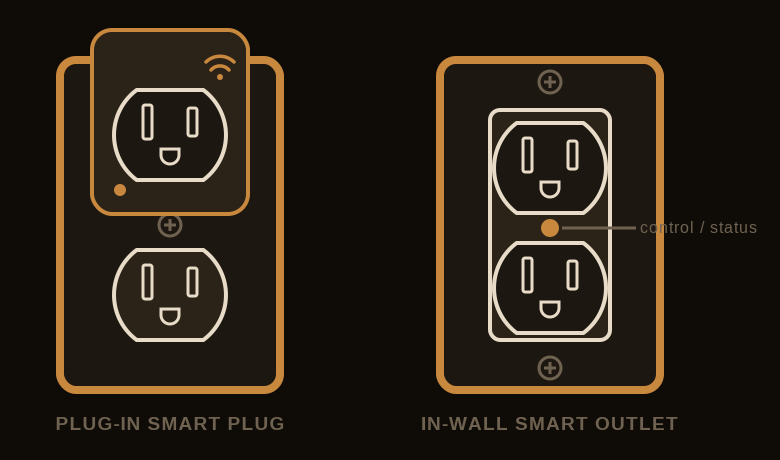
Smart outlets come as plug-in smart plugs, which need no wiring, or in-wall receptacles that replace the outlet. Either way you control them from an app, a schedule or a voice assistant, and many also report energy use.
Which Cover Plate Fits?
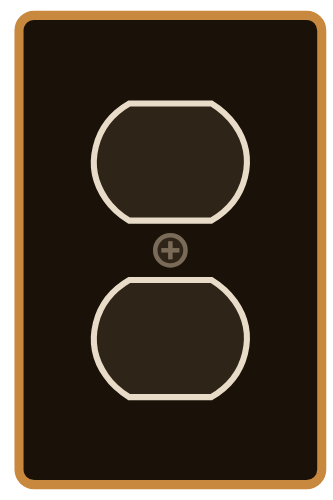
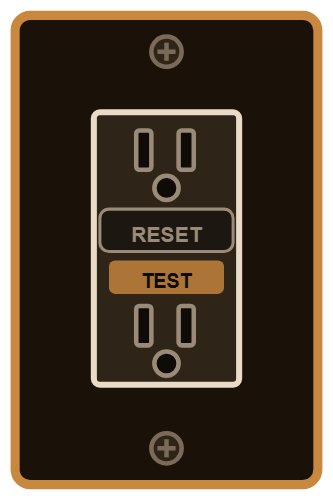
Here's where we come in. A standard duplex outlet (two rounded faces, one screw in the middle) takes a duplex plate. GFCI, AFCI, USB, most smart outlets and the 20-amp GFCI above all have one rectangular face, so they take a Decora (rocker) plate, the same opening as a rocker light switch. Big 240-volt outlets usually take a single-receptacle plate sized to the device. The full breakdown, including how to count gangs and read combination plates, is in our wall plate buying guide.
Before You Change an Outlet
- Turn off the breaker and confirm the outlet is dead with a tester before touching wires.
- Match the outlet to the circuit: same voltage, an amp rating the circuit allows, and GFCI, TR and WR wherever today's code calls for them.
- States and towns adopt NEC editions on their own schedules, often with local amendments, and rules on who can do electrical work and when a permit is needed vary. Check with your local building or electrical inspector.
- Anything 240-volt, anything involving the panel, and anything that leaves you unsure: hire a licensed electrician.
This is general information, not electrical advice. It's based on the National Electrical Code and the sources below, current as of November 2026. Your local code and your inspector have the final word.
Ready to dress up what's on your walls? See our wood and acrylic switch plates and outlet covers, made to order in the shop.
Frequently Asked Questions
Sources & References
- NEMA connector — Wikipedia
- NEMA receptacle diagrams (series) — Wikimedia Commons, Comrade Mmirg, CC BY-SA 4.0
- NEC Requirements When Replacing Nongrounding-type Receptacles — EC&M
- Replacement Options for Two-Wire Non-Grounding Receptacles — EC&M
- Installation Guidelines for Receptacles on Small Appliance Branch Circuits — Legrand / Pass & Seymour white paper
- NEMA Straight-Blade Plug and Receptacle Configurations — Arc-Zone chart
- 220 outlet guide — Inspect and Test
- Dryer, Range, and Oven Outlets — Newman Electric
- GFCI & AFCI Protection Requirements (NEC 210.8 & 210.12) — Open Exam Prep
- Changes to Chapter 2 in the 2026 NEC — Electrical Contractor
- GFCI fact sheet — U.S. Consumer Product Safety Commission
- Check and Be Sure of GFCI Safety Protection — IAEI Magazine
- Tamper Resistant Receptacles: 2008 & 2011 NEC — Electrical Safety Foundation International
- Receptacle replacement requirements — IAEI Magazine
- Required Lighting Outlets, Part II (switched receptacles) — Electrical Contractor